
Resolutions and Recommendations, Part Two
Three albums on constant repeat - and what they say about the state of Jazz today. Doubt, Devotion and Deadheads - and the connection between post-bop modal jazz and 60s rock psychedelia.

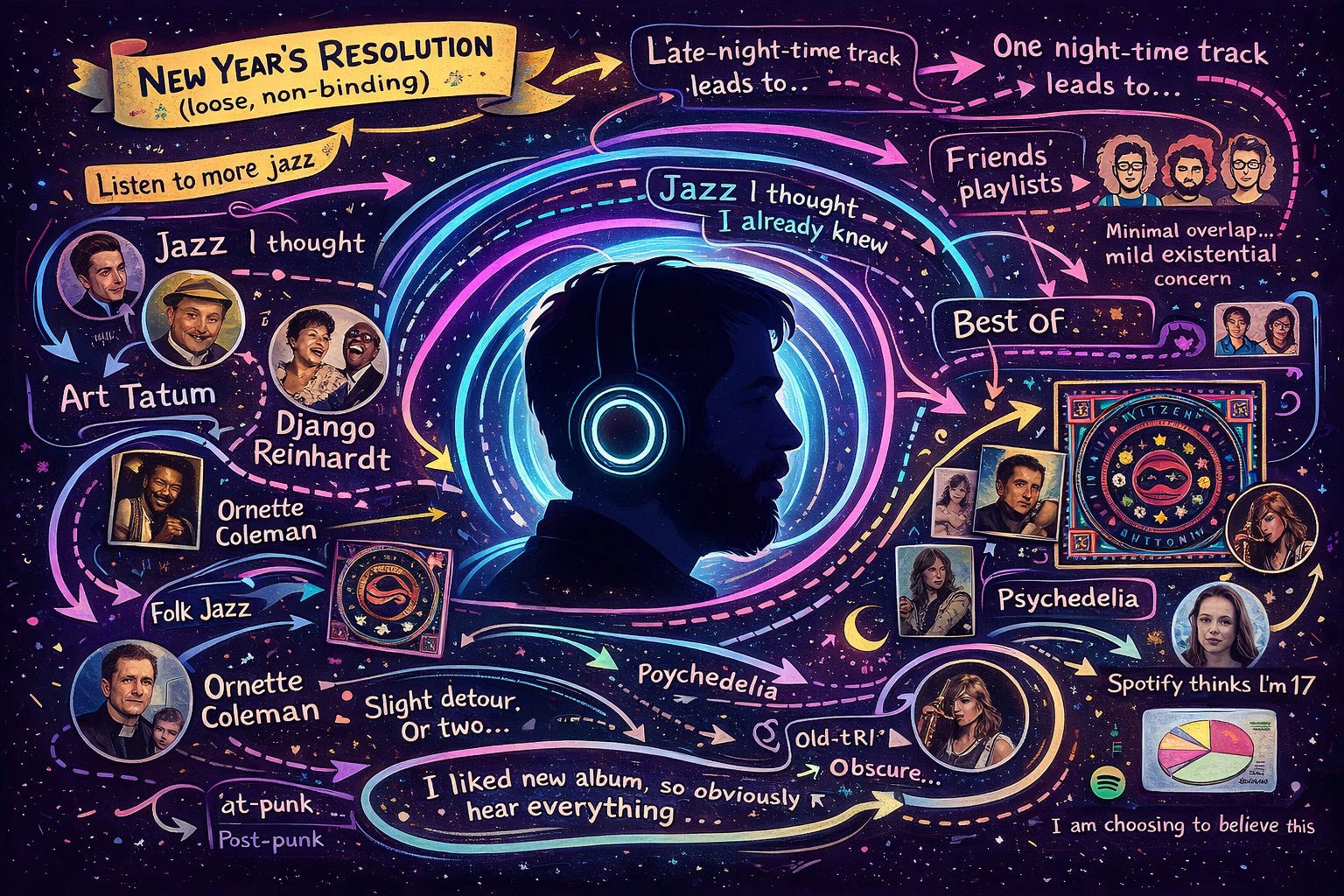
This piece comes in three movements. The first explains my musical new year’s resolutions and traces how my listening actually happens — sideways, repetitive, slightly obsessive. This, the second, is about the three albums that have been at the heart of my listening.
American experimental guitarist Mary Halvorson’s About Ghosts is top of a lot of “best of ‘25” lists — including NPR’s jazz list and The Arts Fuse Jazz Poll . Deservedly so - it is a tremendous, complex work across a variety of styles — playful, engrossing, and richly layered.
It is perhaps shameful that I had never previously encountered Mary Halvorson, given that this is her seventeenth studio album and she is widely regarded as one of the most significant composer-guitarists to emerge from New York’s experimental jazz scene.
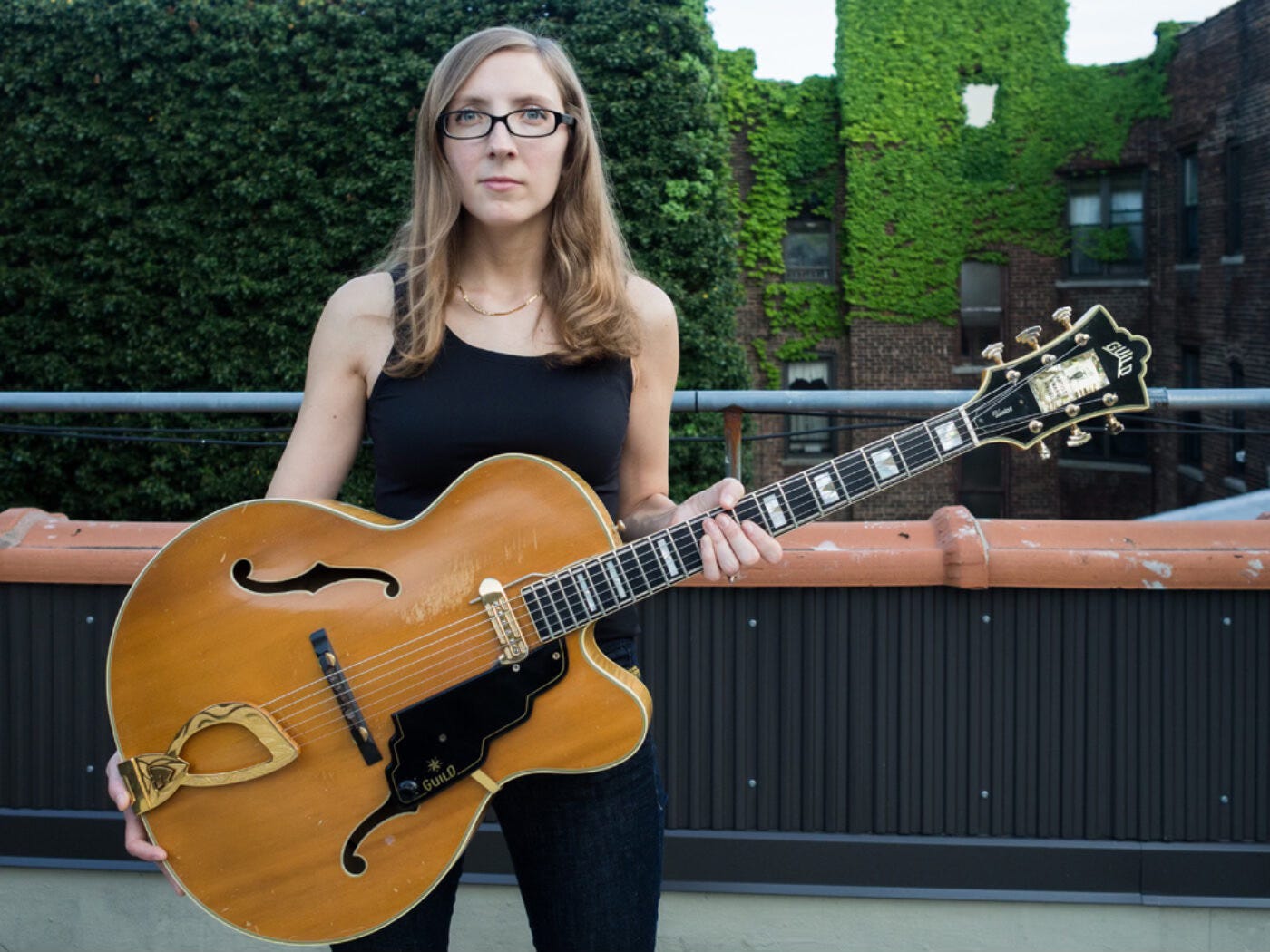
She took up the guitar out of a love for Hendrix, before being steered towards jazz by a teacher whose own passions lay there.
Here, Halvorson expands her eight-piece ensemble with the addition of two saxophonists, which gives the music more heft. The compositions slip and slide between bebop urgency, quasi-orchestral sweep, and something closer to old-time dance music, teasingly appearing for an instant before disappearing, like the ghosts of the title.
As Halvorson says of one of her collaborator’s new album:
“Jacob (Garchick)’s is just crazy — there’s a nostalgia to his songs where you feel as if you’ve heard them your whole life.” About ghosts sounds like fragments from that imagined past.
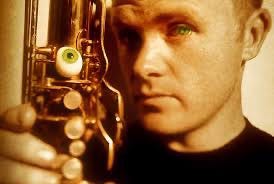
Next on repeat, British saxophonist Iain Ballamy’s Riversphere, Vol. One — meandering and powerful.
Another outstanding musician I had somehow never encountered before, Iain Ballamy has a lineage that stretches back to the 1980s and runs deep through British jazz and improvised music
. Riversphere is Ballamy’s metaphor for how music ought to function. In environmental terms, the riversphere describes the interconnected planes of water where rivers meet — systems in constant motion, where it is hard to tell the relationship between tributaries, rivers, and banks.
Ballamy hears this same dynamic at work in music: between musicians, compositions, listeners, and the moment of performance itself. His stated aim with Riversphere is to blur the boundaries. As he puts it, it:
“balances five improvisations created to sound as if composed and five compositions created to sound as if they were improvised.”
The third record that has been on constantly is by an old favourite: Muriel Grossmann,
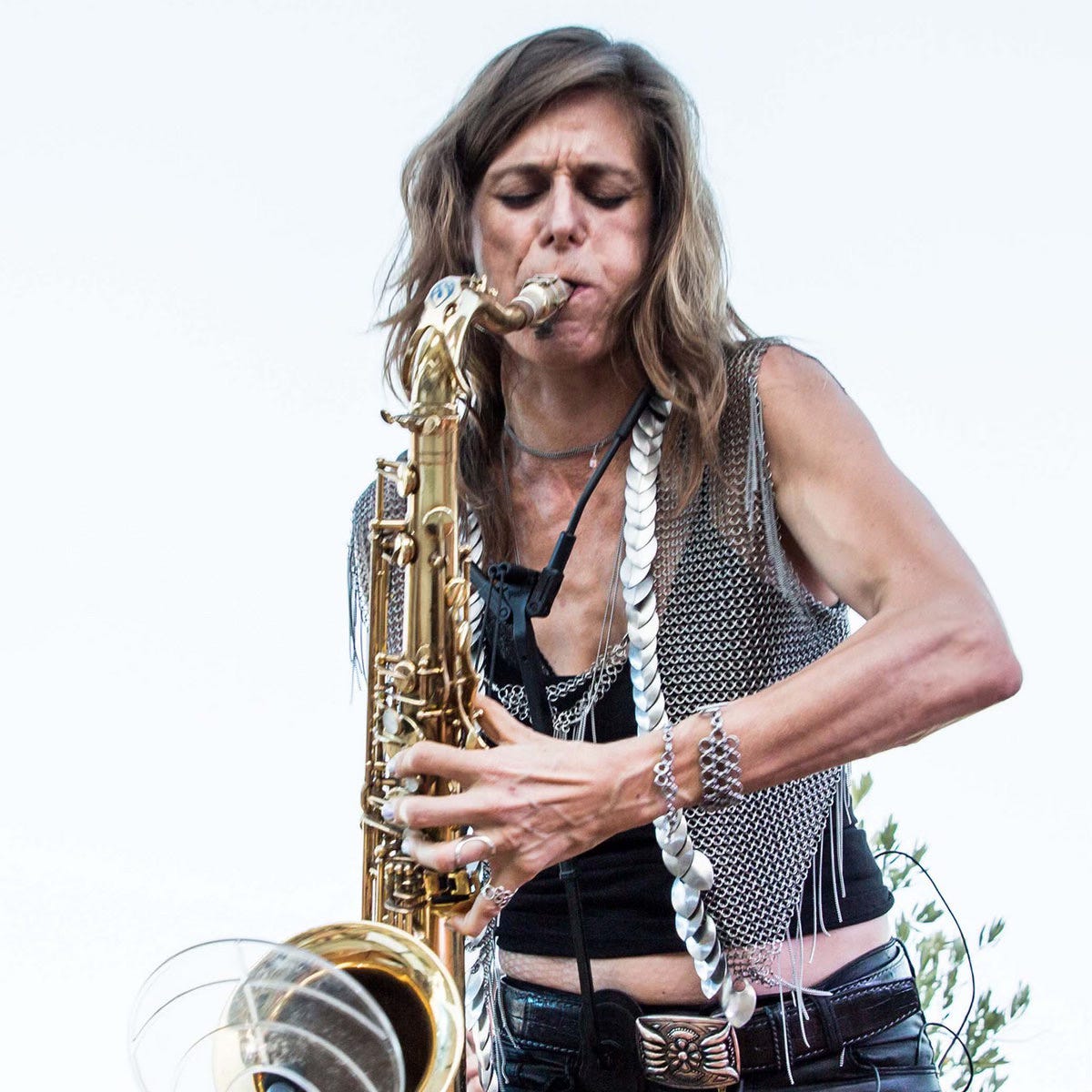
with what may be one of the final albums to make it out of 2025, released on 29 December. Something that should not work on paper, but absolutely does in practice: her interpretations of music by the Grateful Dead and McCoy Tyner.
Tyner was an influential jazz pianist in the 1960s, known especially for his work with John Coltrane.
And the Grateful Dead — well, you know the Grateful Dead. Or maybe, like me, you know about that legendary band without really knowing their music. I have read the loving obits of Bob Weir, who died a few days ago. I know Jerry Garcia’s band set the standard for West Coast, hippy, acid-fuelled, very long sets, but I couldn’t name a single tune. Yet another argument for scouring the back catalogue. Play this before listening to the same track on Grossman’s album.
At any rate, what is the connection between post-bop modal jazz and 60s rock psychedelia? On the surface, not a huge amount. Jerry Garcia had an enormous appetite for all types of music — from bluegrass to blues, from Latin to jug bands — but he loved jazz too and he was clear that he learnt something from those celebrated soloists.
“Oh, definitely Coltrane, for sure. But I never sat down and stole ideas from him; it was more his sense of flow that I learned from. That and the way his personality was always right there — the presence of the man just comes stomping out of those records. It’s not something I would’ve been able to learn through any analytical approach.”
On one occasion, Garcia even recorded with Ornette Coleman, the doyen of the squalling avant-garde. Judge for yourself.
Grossmann herself has suggested that the connection lies in a shared understanding of long-form exploration. Duration is not a problem; the music is not about reaching resolution so much as inhabiting the journey. It explores rather than concludes. In both cases, the aim is spiritual intensity — sustained, immersive, and unresolved.
I asked ChatGPT what it made of these three albums. I like to imagine it sitting upright, fiddling with its bow tie

pushing its glasses up its nose, and then declaiming in a New York accent reminiscent of Woody Allen : “Taken together, these albums sketch out three contemporary jazz positions:
1. Jazz as ritual (Grossmann)
2. Jazz as system (Ballamy)
3. Jazz as critique (Halvorson)
What makes Ghosts especially important in this grouping is that it refuses comfort. Where the other two allow immersion, Halvorson insists on awareness. You are never allowed to forget that music is constructed, contingent, and fragile.
In that sense, Ghosts operates almost as a corrective.Your recent turn towards these records is not accidental. All three are responses to the same problem: what does jazz do once novelty is no longer the point?
Grossmann answers with devotion.
Ballamy answers with interdependence.
Halvorson answers with doubt—and with precision.
That tension is not a weakness. It is, arguably, the most interesting thing happening in contemporary jazz right now.”
The final part of “Resolutions and recommendations'‘ will be with you tomorrow - celebrating Ella Fitzgerald, featuring a playlist of 14 very different versions of a jazz standard and my top tip.
Fantastic piece Mark
Can’t wait to get home and play some of this stuff