
Cosmic Yazz - floaty forest jazz
and she celebrate Miles 100th birthday with the human touch

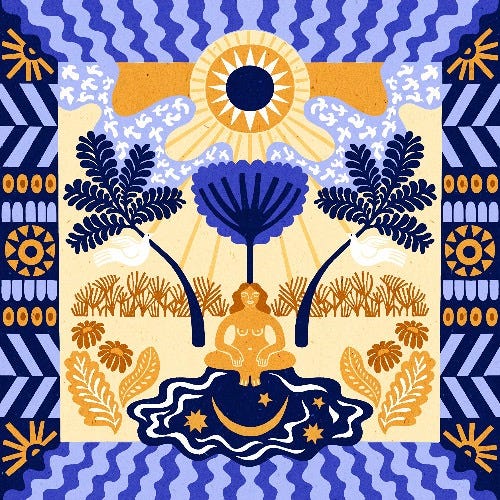
I’ve held a torch for Yazz Ahmed ever since the single “Paradise in the Hold” appeared in the autumn of 2024, before the brilliant album of the same name came out a few months later.. So I leapt upon this EP, Forest Bathing, as soon as it appeared.
It’s not exactly a sea change, but it’s different: more cosmic, more spiritual than her other work. Further investigation suggests it was largely recorded during lockdown in 2020, so perhaps not a certain new direction but a curve in the past which might point towards a possible future path.


As ever the artwork, by Sophie Bass, is as fine as the music
The first track is “Dawn Patrol”: all insistent drums and hypnotically looped trumpet until about halfway through its seven-minute length, when it becomes much gentler and quietly ethereal before returning for a funky climax.
What is it all about ?
It’s right there on Yazz’s Substack blog — which is generally well worth reading — that she imagines “riding the waves at dawn, then swimming underwater, represented in the middle section of the piece, then rising to the surface, noticing that the sun is out, and getting back on my board to surf some more.” Then she confesses she’s never been surfing so far.
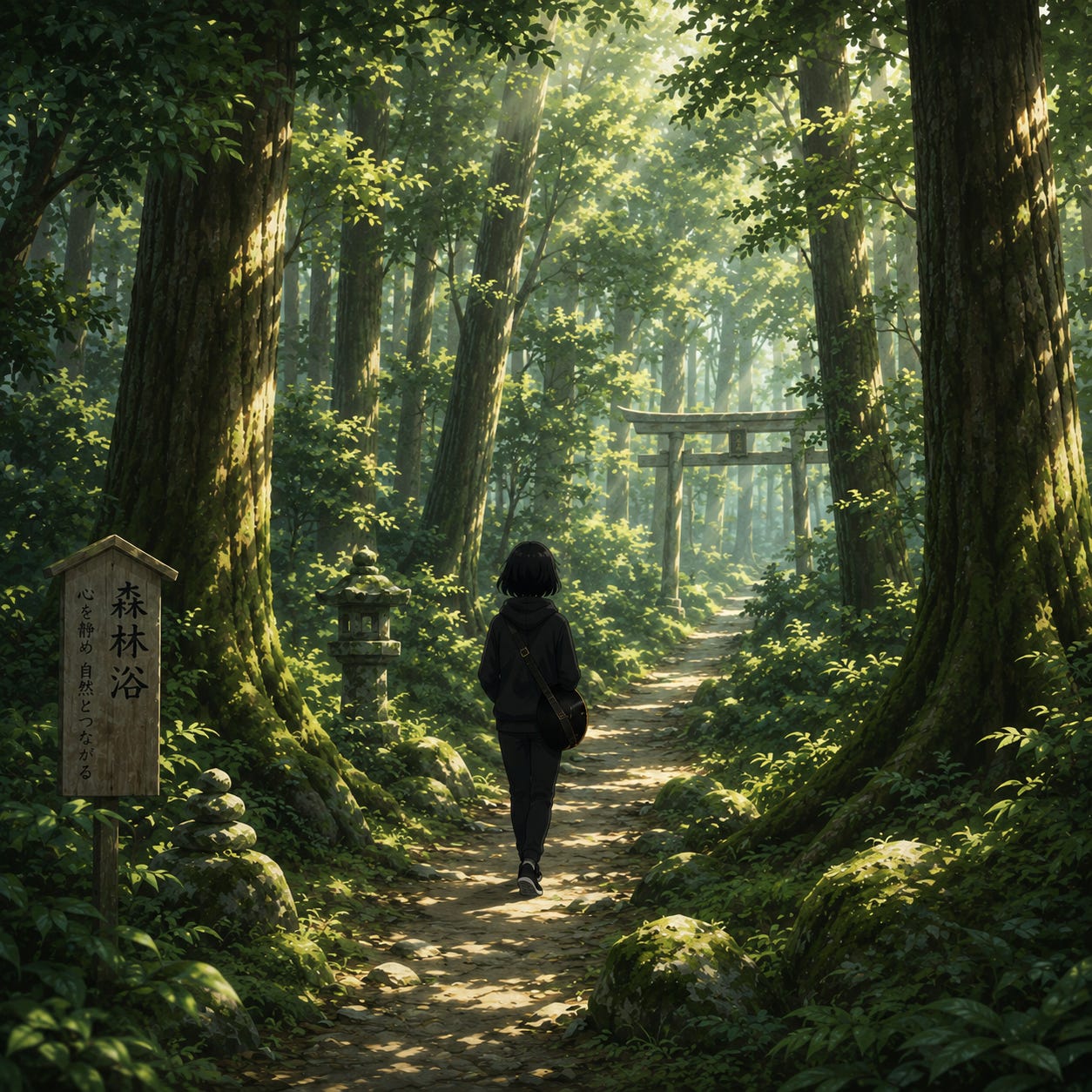
Next up is the title track, “Forest Bathing (森林浴)”. The name comes from a Japanese term meaning to immerse yourself in nature, which is something more profound than simply donning a Barbour and taking the dog for a walk. It means slow treks between the trees, relishing the sights and sounds, thinking about the dew on the leaves and the sound of an animal in the undergrowth.
One might have hoped “shinrin-yoku” had its origin in some ancient gnostic cult within Shinto which secretly developed rituals to create mindfulness. But the truth is rather more prosaic: the term was coined in the 1980s for a public health campaign by the Japanese Ministry of Agriculture, Forestry and Fisheries.
Be that as it may, the music is tremendous: introspective, with Yazz’s mournful trumpet creating a sense of inner peace
.
“A Moment to Be Thankful” begins with birdsong recorded in Yazz’s garden during lockdown — so no traffic sounds — which she then manipulated in the studio and took inspiration to create motifs on her specialist instrument - a quarter tone flugelhorn.
I’ve said this was more spiritual, cosmic — but what does that mean? Both have specific meanings within jazz terminology, but they’re both to do with mood and intent rather than just the sound. And, I think, a good journalistic yardstick is: insert the opposite words and see whether it makes some sort of sense.
Let’s see — yes, jazz can be corporeal and earthy, and this isn’t. This certainly fits here: meditative, modal, ecstatic, full of stars. Or in this department’s vernacular, “more floaty”.
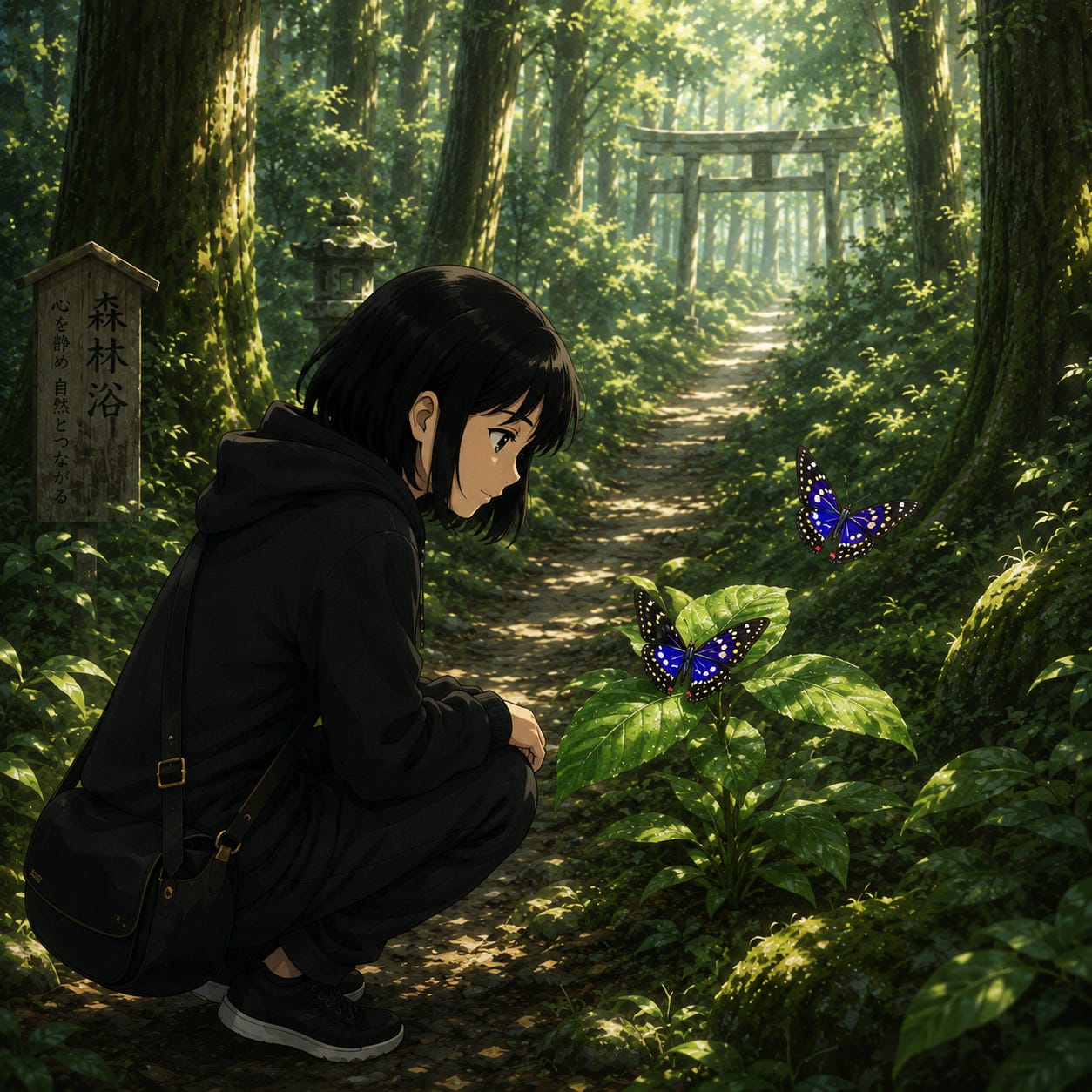
“Questions, No Answers” is the most rewarding track of all : a duet with her sometime producer and fellow experimental trumpeter Noel Langley, which, she writes, “includes live sampling” and is “a wholly improvised conversation or meditation”. Indeed, it is almost the definition of what I mean by “floaty”. Yazz continues: “I now offer it as a prayer of hope, longing for more peaceful times ahead in our troubled world.”
Amen to that.
Seeing her at Ronnie’s last year convinced me that one of my New Year’s resolutions had to be to listen to more live jazz. It is something I’ve been quietly achieving, quietly in the sense that I don’t often write about it here, because I don’t always feel I have the right words for it, or the right way to describe the jazz and why I like it.
The first gig of the year was in a Chelsea basement, with a school-dinner sort of Sunday lunch to celebrate the end of dry January, in the company of an enthusiastic professor of scat and a youthful jazz orchestra.
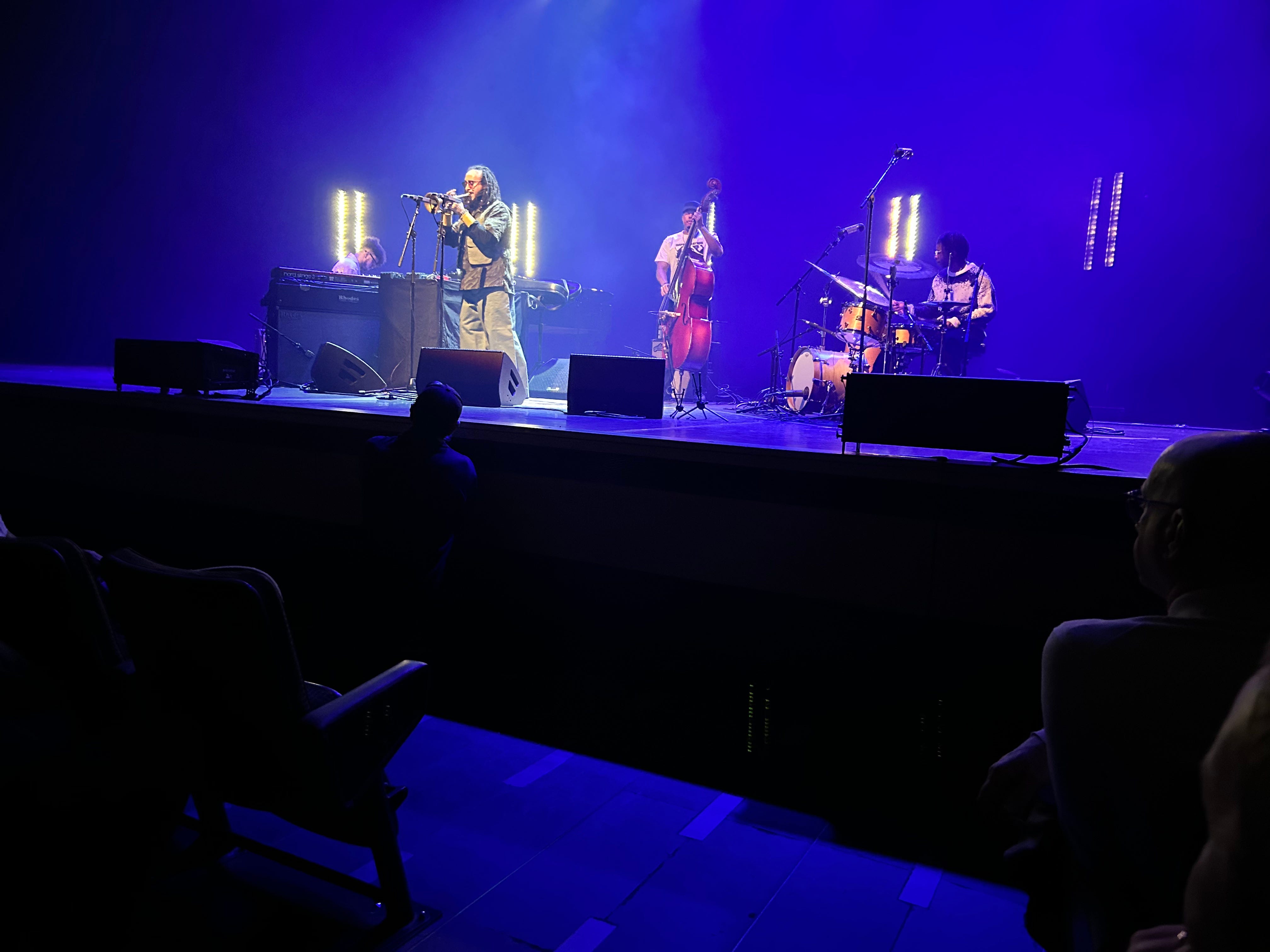
Then there was Theo Croker celebrating Miles’ 100th birthday early at his Miles Mixtape gig at the Festival Hall. It brought together the marvellous South London singer Ego Ella May and the great saxophonist Gary Bartz.
Ego Ella May lent her soft, intimate, neo-soul gravity; Bartz, who actually played with Miles in the early seventies, brought the stonking, steaming authority of someone for whom this music can never be trapped in the archive but is still living memory. Croker was less a curator than an excited schoolboy bringing together friends who he knows will get along.
I’ve said it before and I’ll say it again: for many of us, Miles Davis’s Bitches Brew is the pivot point. So, between the album’s 50th anniversary and Miles’ 100th birthday, what an amazing focus for material about the greatest musician of the last century.
There’s a wonderful series on Radio 4 and BBC Sounds called Legend: The Miles Davis Story, which understands the scale of him: the restless reinventions, the cold beauty, the danger, the arrogance, the tenderness, the way he kept dragging music into futures it hadn’t yet imagined.
But I also stumbled across this tribute recorded by French television — Emma-Jean Thackray taking on Miles in ways that are in one sense unexpected, but then totally expected from those who really love Miles - They are not reverential. They don’t embalm him. They treat him as material, as voltage, as a set of provocations still fizzing away in the wires.
And then this magnificent contribution from Yazz herself., who also understands this anniversary is an opportunity not for a museum-piece tribute to Miles, but something looser and more alive: a way of treating the past as material to be remixed, worried at, loved and pushed forward. And Yazz really does push it forward, carrying further along the path embarked on in ‘forest bathing’, giving the music not just a melancholic vibe but quite an eerie one too. For all Miles’ brilliance, for all his genius in conjuring previously unthought of emotions she fills a void and adds a welcome a human scale warmth to his the music. . Dead for 35 years and yet he is still very much a live wire.
Again this was on French TV. Why is BBC TV and Sky missing this trick.?
This is exactly the sort of thing that ought to be everywhere: on television, on radio, online, cut into clips, talked about, argued over. Not because jazz needs to be preserved in aspic, but because Miles Davis remains one of the great routes into understanding modern music — hip-hop, soul, funk, electronica, ambient music, spiritual jazz, cosmic jazz, all of it.
If you want a map of where so much of the last half-century came from, you could do a lot worse than start with Miles, and particularly with Bitches Brew.
But don’t stop there -recently I’ve been diving back into the big band sound.
I’ve been so busy recently, overwhelmed by planning my visits to Brazil and then Phoenix, Arizona, that my usual obsessive gig planning had been abandoned. I was quizzing our eldest son Jake — equally overworked, equally beset by FOMO, equally good at burning the candle at both ends and in the middle, but of course without Parkinson’s disease to make him even slower — about the plans for their wedding in late January. He told me, rather testily, “I’ve only got a 72-hour horizon.”
My 72-hour horizon is now expanding. I’ve been frantically booking stuff, from Love Supreme Festival next month to Yard Act in January.
The first thing that caught my eye was the Battersea Jazz Festival. I was wondering about what used to be my old stomping ground of South London. This was the festival’s opening night but you’ve got until the 16th July 2026 to see several other gigs.
The swing version of Romeo and Juliet seemed enticing, particularly because it was at a venue I’d already wanted to try out: The Grand in Clapham. Not, as I thought, on the high street, but pretty close to Clapham Junction station.
It’s a magnificent old building, music-hall style. Seating was fine, although a table of four would have been better. It’s a shame they didn’t have beer on tap, just cans and bottles. DICTATE
What I hadn’t expected was a mini ballet to go with it.
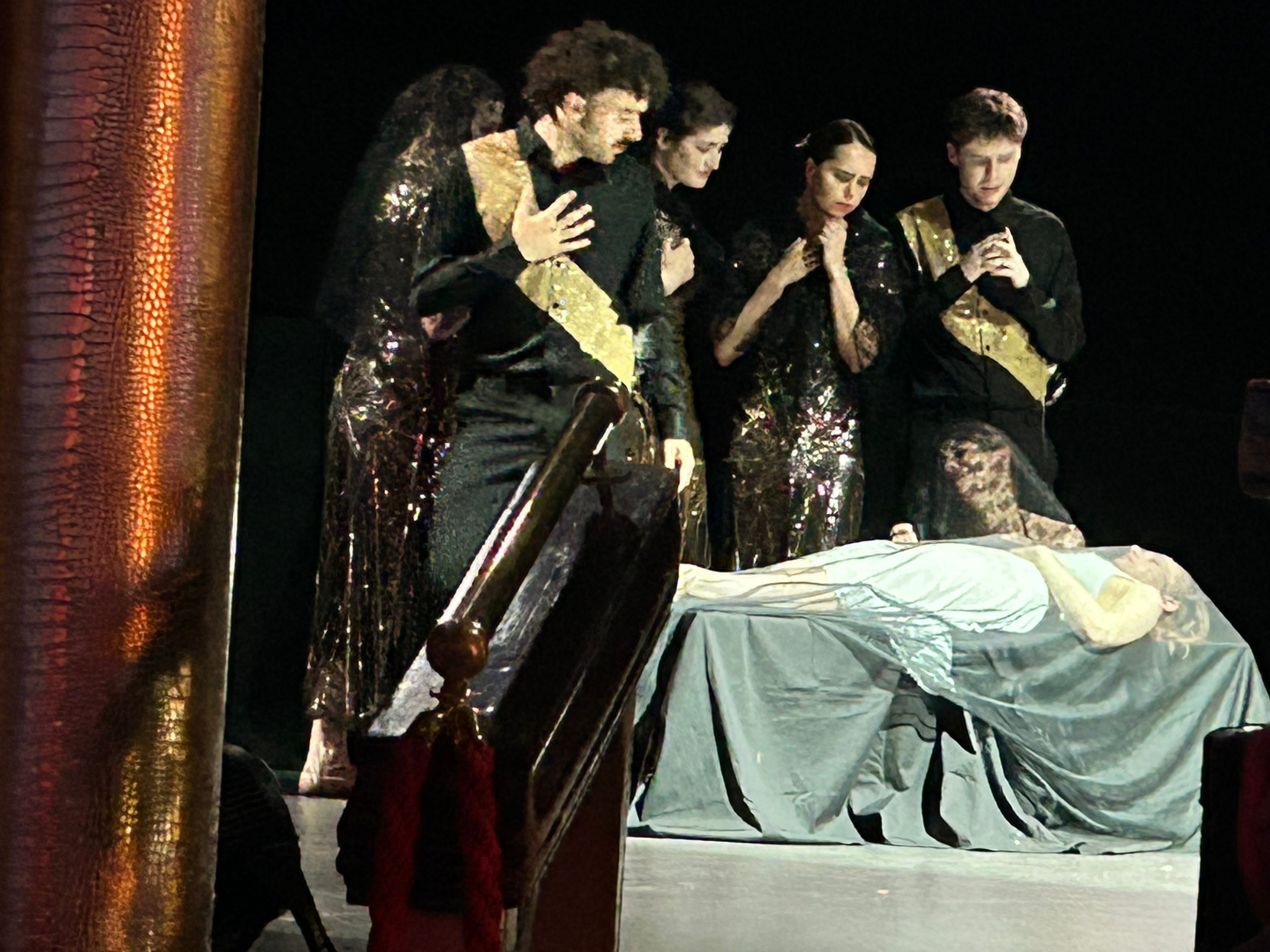
I like my dance, on the whole, abstract. I tend to shy away from tutus and swordplay, but this was a treat, and the troupe, E33 Dance Company, had worked hard to create something special.
But for my money, Hugo Jennings’ Big Band — no disrespect to the dancers — is in a different league altogether: fluid, sophisticated and powerful. Not a bit floaty. It’s a very sophisticated territory.
I think it’s safe to say the guy behind both the interpretation and the festival itself, Hugo Jennings, must have an even shorter event horizon than mine and Jake’s. Teaching in the morning, performing in the evening, and somehow trying to find space to write out a jazz score and orchestration based on Prokofiev’s ballet. I don’t know where he finds the time, but I’m glad he does.
.
His pleas for more venues such as The Grand — which welcome experimentation without charging artists the earth —were heartfelt and are really important. More such venues are desperately needed.
For this came together after just four live rehearsals — but before that think of all the people-hours piled into it. And then realise that this is just a one-off: the only performance planned so far.
This can’t be right. It must get another airing. I’ll be at the front of the queue for tickets when it does.